
Last updated November 23, 2026
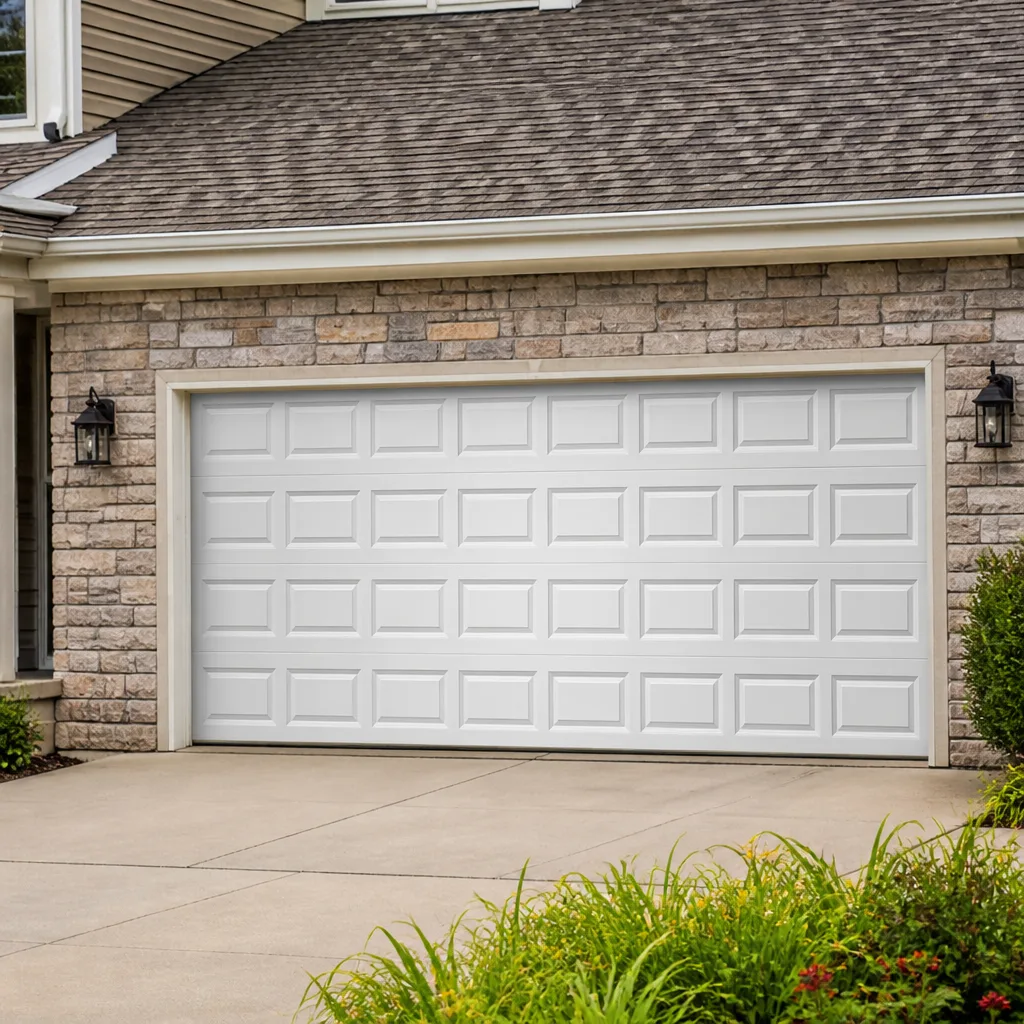 Raised-panel steel
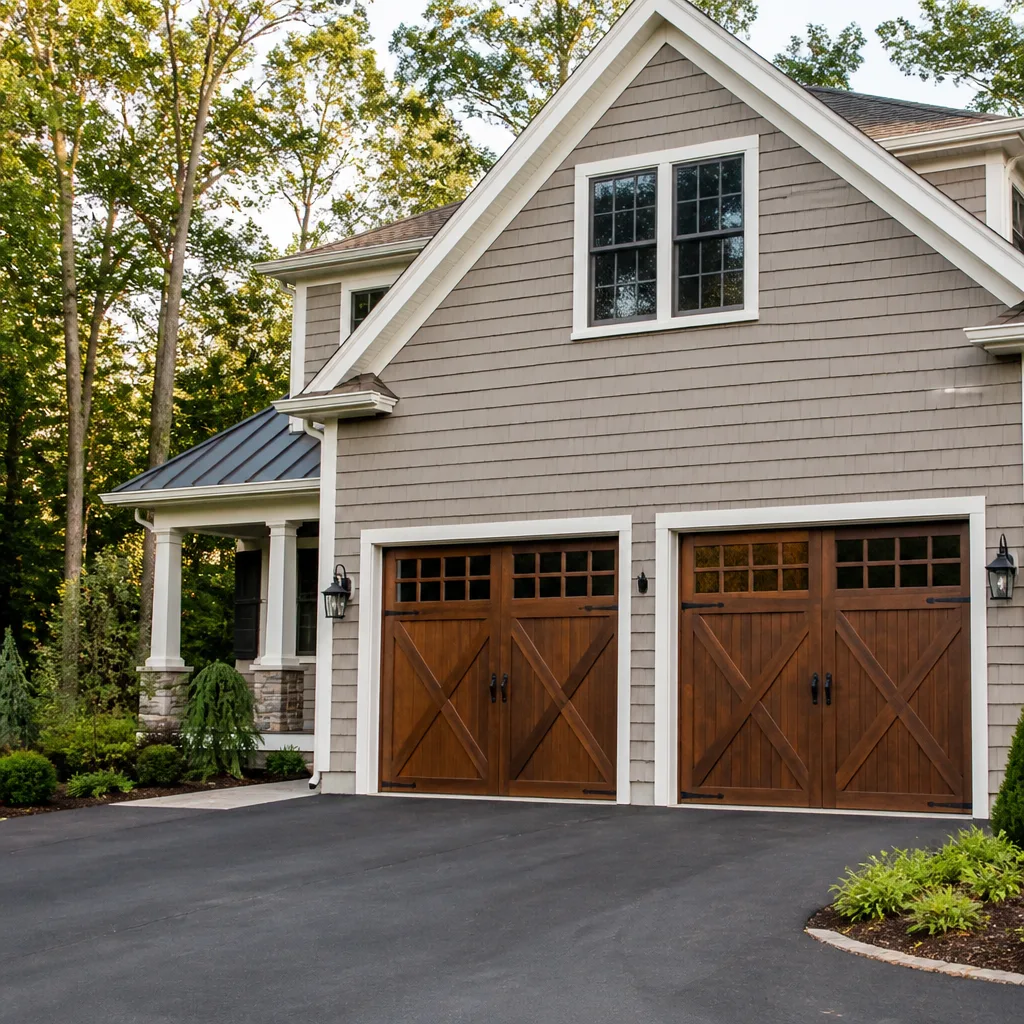 Carriage house
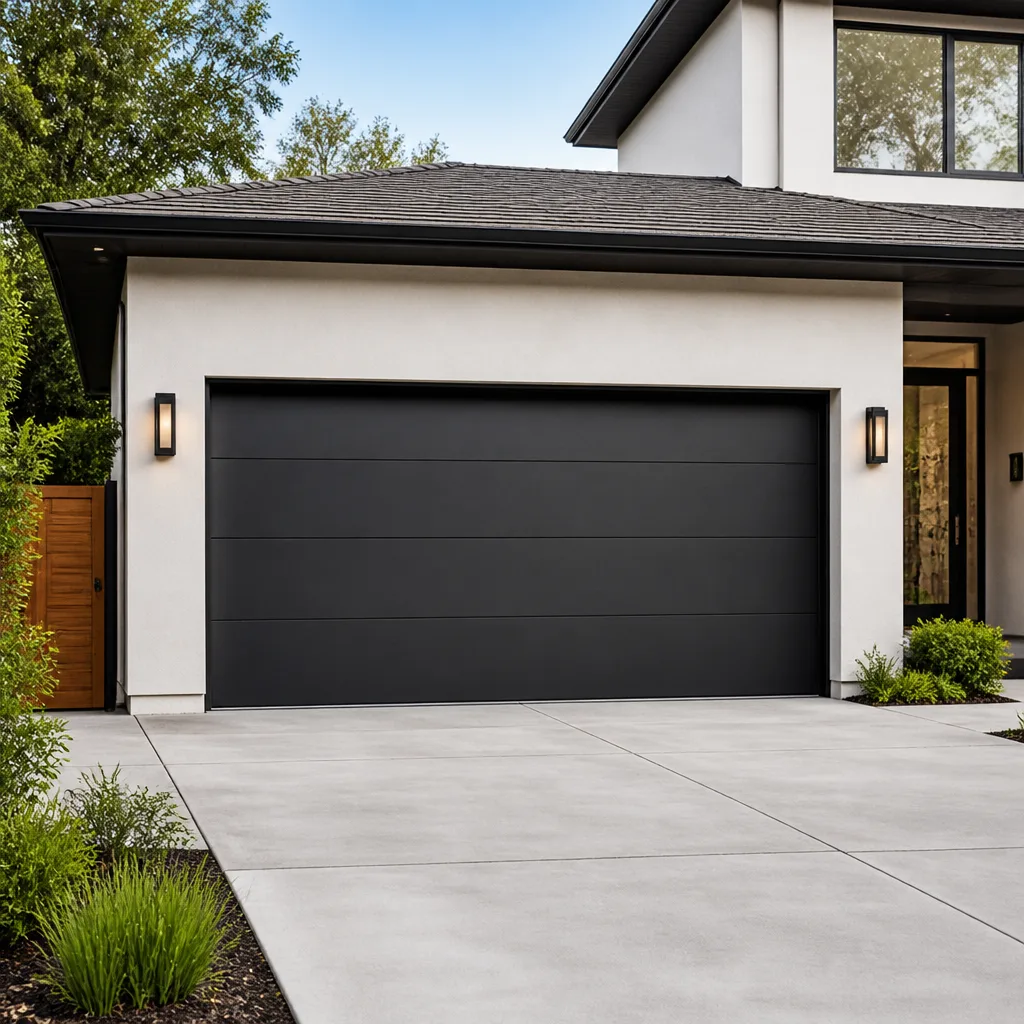 Modern flush
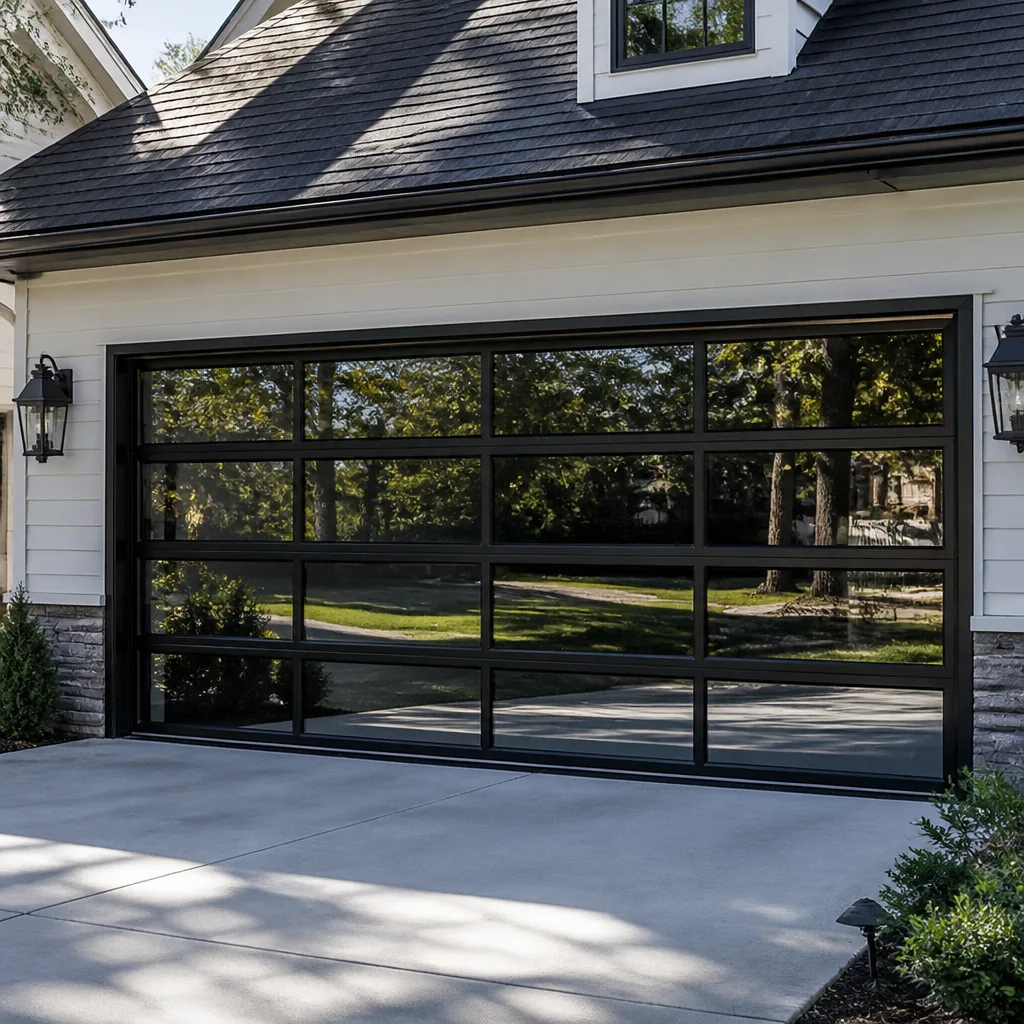 Full-view glass
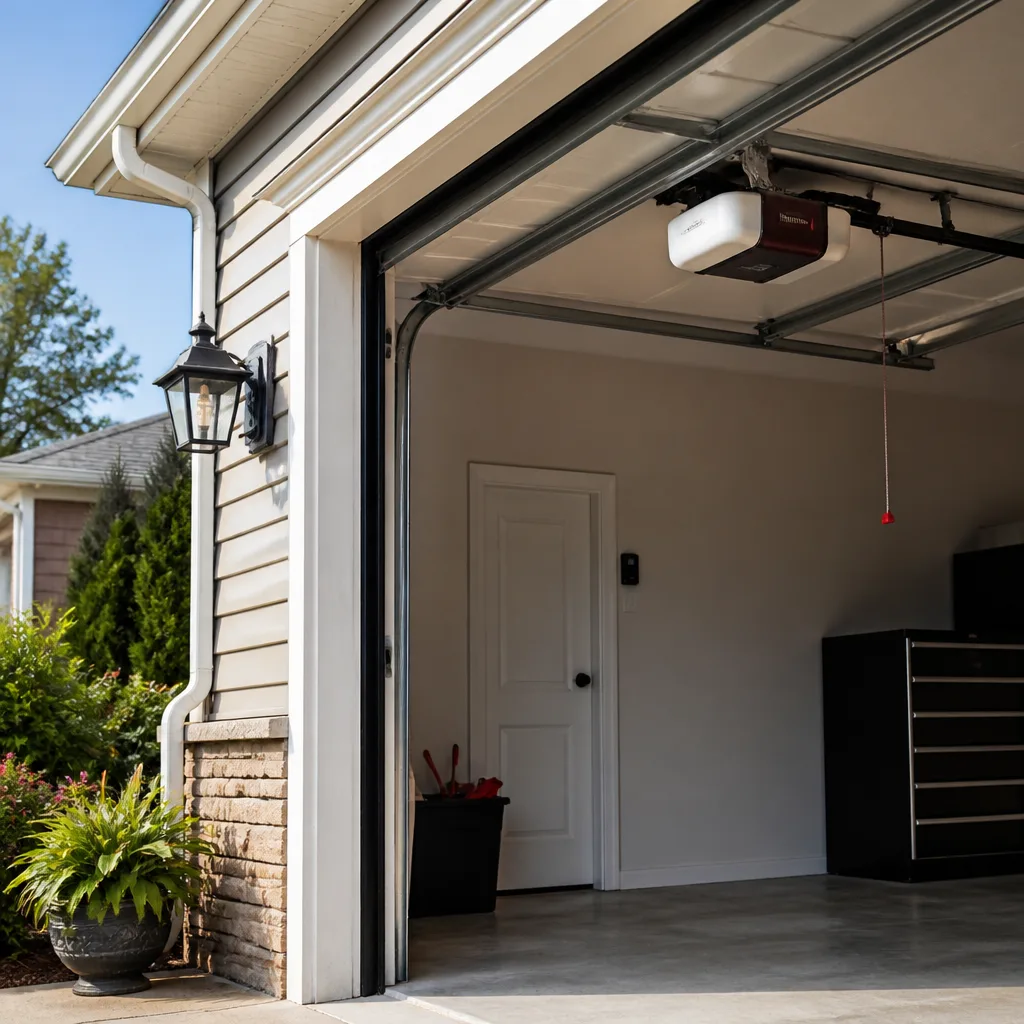 LiftMaster openers
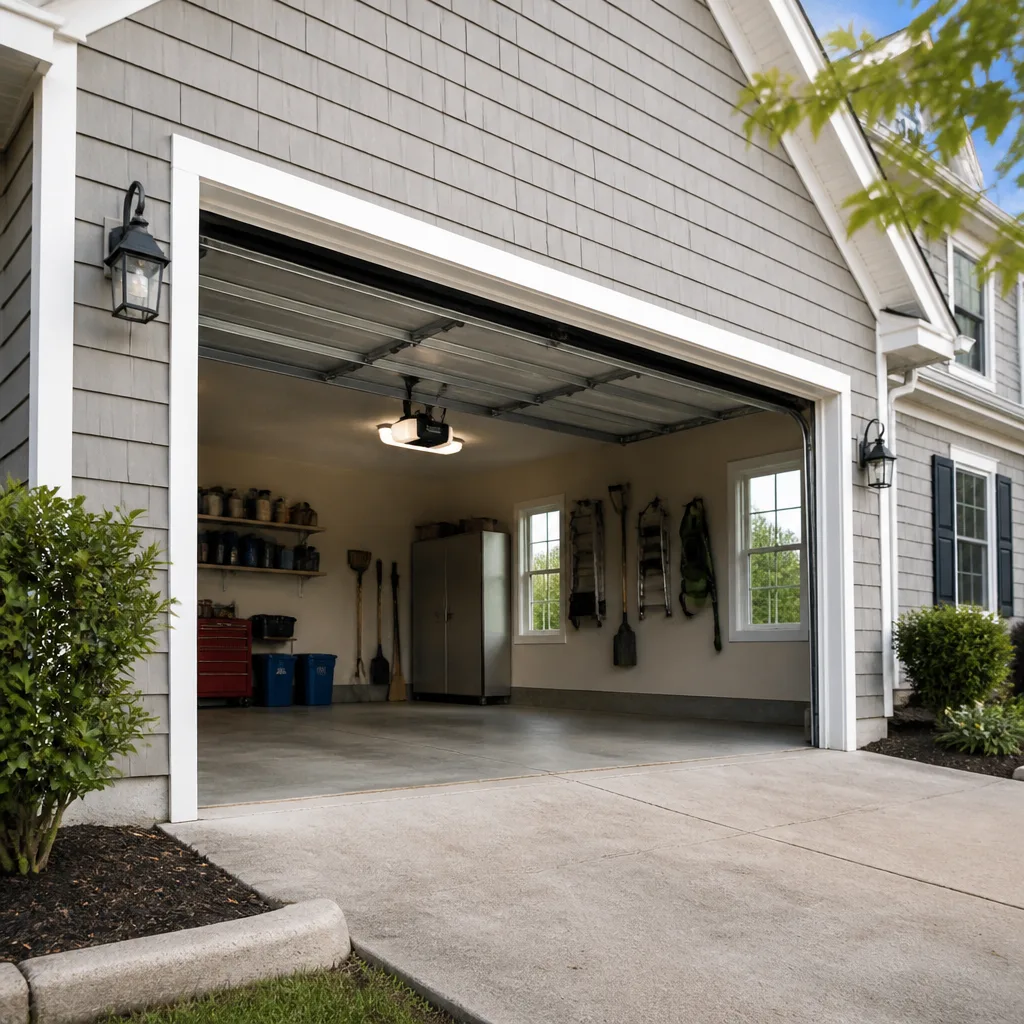 Chamberlain openers
Full 25-point door and opener safety check with every visit - springs, cables, rollers, tracks, and your LiftMaster or Chamberlain opener included
You get a price before we start. It does not change when the pro arrives.
Get your free estimateThe Complete Guide to Garage Doors in Beverly
Most Beverly homeowners can name the brand of their furnace, their water heater, even their dishwasher. Ask them what brand of garage door opener hangs from the ceiling, or whether their springs are torsion or extension, and the answer is usually a shrug. That gap is expensive. When a door fails, a technician who has to guess at the system wastes time, orders the wrong part, or makes a call that shortens the life of the whole assembly. This guide closes the gap. You’ll learn how to identify what you actually own, how Beverly’s weather wears specific components faster than inland towns, how a door ages from new to end-of-life, and how to hand any future technician a one-page dossier that gets the job done right the first time.
Quick Answer
A garage door in Beverly is a mechanical system with a predictable lifespan: springs typically last 7 to 12 years, openers 10 to 15, and the door itself 20 to 30 with proper care. Understanding your door’s brand, drive type, and spring configuration before something breaks is the single biggest factor in avoiding repeated repair calls. Beverly’s freeze-thaw winters and humid summers accelerate wear on springs, bottom seals, and panel paint compared to drier inland climates.
Styles & brands we work with
- Raised-panel steel
- Carriage house
- Modern flush
- Full-view glass
- LiftMaster openers
- Chamberlain openers
Table of Contents
- How Do You Identify Your Garage Door System?
- How Does Beverly’s Climate Affect Your Garage Door?
- The Lifecycle of a Garage Door in Beverly
- Which Repairs Are Brand-Specific?
- Why Spring Repair Is a Specialist Job
- Building Your One-Page Door Dossier
- What Maintenance Actually Matters
- When to Repair and When to Replace
How Do You Identify Your Garage Door System?
You can identify your garage door system in about fifteen minutes with a flashlight and a phone camera. The goal is three pieces of information: the door manufacturer, the opener brand and drive type, and the spring configuration. Write them down or photograph the labels. That’s it. Everything else a technician needs can be worked out from those three facts.
Start with the door itself. Open it fully and look along the inside of the bottom panel, the top panel, and the vertical stiles at each edge. Manufacturers put a sticker or a stamped plate somewhere on the interior face. A Clopay door usually carries a clear model sticker on the top section. Amarr and Wayne Dalton doors often have a plate near the bottom hinge. Raynor doors tend to label the end stile. If the sticker has worn away, the panel profile itself is often enough for an experienced eye to recognize the make.
Next, the opener. The motor unit hanging from the ceiling has a brand label on the back or side. Note whether it’s a belt drive, chain drive, or screw drive, and whether the rail is one piece or sectional. LiftMaster and Chamberlain units share a great deal of internal design, which is useful to know when a part needs sourcing. Genie openers have their own distinct gear and logic board layout. If the opener is a smart unit with a wall control that connects to Wi-Fi, note the model number on the wall unit too.
Finally, the springs. Look above the door. A horizontal shaft with springs coiled around it, mounted over the door, means you have torsion springs. Springs running along the horizontal tracks on either side, stretching toward the rear, mean extension springs. Count how many springs you see, and photograph the color painted on the coil. That color identifies the wire gauge and tells a technician exactly what to order before arriving. Never touch, adjust, or try to measure a spring under tension. Those coils store enormous force, and a spring that lets go can cause serious injury. Identification is a visual job only.
How Does Beverly’s Climate Affect Your Garage Door?
Beverly’s weather is hard on specific garage door components, and it’s worth understanding which ones so you can watch them. The pattern here is wet winters with repeated freezing and thawing, humid summers, and wide swings between the two. That cycle does more damage than steady cold or steady heat ever would.
Torsion springs are the first casualty. Every freeze-thaw cycle works the steel, and the constant expansion and contraction of a door that’s opened and closed daily in these conditions adds up. A spring that might last 12 years in a dry climate often wears out faster here. You’ll notice the door getting heavier, the opener straining, or a loud bang from the garage. That bang is usually a spring breaking, and it happens most in cold weather.
Bottom seals take a beating too. The rubber or vinyl seal along the bottom edge has to flex against a concrete floor that moves with the frost. Over a few winters it hardens, cracks, and stops sealing. Once it stops sealing, water and cold air get under the door, and the bottom panel starts to show it. Panel paint is the third weak point. Humid summers and wet winters are tough on factory paint, especially on south-facing doors that get full sun. Faded or bubbling paint isn’t just cosmetic; once moisture gets behind it, the steel begins to rust from the inside.
Hinge and roller lubrication matters more here than people realize. The same humidity that fogs up your windows works on every metal pivot point in the door. A door that squeals and groans through a Beverly winter is telling you its moving parts are dry. That’s a maintenance item, not a repair.
The Lifecycle of a Garage Door in Beverly
A garage door doesn’t fail all at once. It moves through stages, and knowing which stage you’re in helps you decide whether to repair, maintain, or plan for replacement. Here’s how the timeline typically runs in this climate.
- Years 0 to 3 – The quiet years. A new door needs almost nothing beyond a yearly check of the balance and a light lubrication of the moving parts. This is the best time to record your brand and model information.
- Years 4 to 7 – First wear items. Rollers and hinges start to show wear. Bottom seals may need replacing. The opener is still solid, but you may notice the door running a little louder. A tune-up here extends the life of everything downstream.
- Years 8 to 12 – Spring replacement window. This is when torsion springs typically give out in Beverly’s climate. Replacing springs is normal and expected. It’s also the point where a professional should check the cables, drums, and bearing plates while the springs are off.
- Years 12 to 18 – Opener replacement window. Openers from this era start to fail on the logic board, the drive gear, or the safety sensors. If your opener predates modern safety reversing, replacing it is a safety upgrade as much as a repair.
- Years 18 to 25 – Panel and structural wear. Panels may show rust, dents, or paint failure. The door may still operate but look tired. Individual panel replacement is often possible if the model is still made.
- Years 25 to 30 – End of life. Doors that have been maintained can run this long, but at this stage the cost of repairs starts to outrun the value. This is when replacement makes sense.
None of these timings are fixed. A door that gets yearly lubrication and balance checks will land on the long end of every range. A door that’s never been touched will hit the short end.
Which Repairs Are Brand-Specific?
Some garage door repairs are universal, and some are not. A technician who knows the difference saves you money and avoids a second visit. This is where a generalist often makes the wrong call, and where brand familiarity earns its keep.
The door and the opener are separate systems with separate brands, and that’s the first thing to understand. A Clopay door might have a LiftMaster opener. A Wayne Dalton door might run a Genie. When something goes wrong, you need to know which system is at fault before deciding who works on it.
Brand-specific repairs fall into a few clear categories:
- Opener logic and drive components. A LiftMaster or Chamberlain travel module failure calls for a different diagnostic path than a Genie gear failure. The parts don’t interchange, and the troubleshooting sequence differs. Guessing here leads to replacing a part that wasn’t the problem.
- Safety sensor alignment and replacement. Sensor design varies by opener brand and generation. A sensor from one platform won’t work on another, and the wiring harnesses differ.
- Spring sizing and configuration. Torsion springs are matched to the door’s weight, width, and height. A tech who doesn’t check the door’s actual weight and the existing spring’s wire gauge will install the wrong spring, and it will fail early.
- Panel replacement. Door panels are model-specific. Clopay, Amarr, Wayne Dalton, and Raynor all use different profiles and finishes. If a panel is damaged, matching it means knowing the exact model.
- Track and hardware systems. Some manufacturers use proprietary track profiles or hinge designs that don’t accept generic replacement parts.
When you call for garage door repair, the first question worth asking is whether the technician can name your brand and system type. A specialist familiar with LiftMaster, Chamberlain, Genie, Raynor, and the rest of the major platforms already knows the layout before arriving.
Why Spring Repair Is a Specialist Job
Spring repair is the most dangerous routine job in this trade, and it’s a core service for a reason. The springs above your door hold the door’s entire weight in tension. When one fails, the door becomes extremely heavy, and in some configurations it can drop. That’s a safety hazard for anyone underneath, and a security problem once the door won’t close.
A generalist handyman often declines spring work, and there’s good reason. The job requires specific winding bars, a knowledge of spring sizing, and the training to handle the tension safely. It’s not a job to learn on. Done wrong, an improperly sized spring will fail early, a poorly wound spring can let go, and the cables and drums can be damaged in the process.
In our experience, spring repairs done properly follow a clear sequence. The technician measures the door’s weight and confirms the existing spring’s wire gauge and inside diameter. Then the springs are wound down safely, the new springs are matched exactly, and the whole assembly is tested for balance. A balanced door stays open at half-height without help. That’s the test that confirms the job was done right.
Beverly’s climate makes spring replacement a regular event, not a rare one. If your door has gotten noticeably heavier, if you hear a loud snap from the garage, or if the opener is straining to lift a door it used to handle easily, a spring is the likely culprit. Have it looked at before something else breaks. Our garage door spring repair service handles this as a dedicated job, not a side task. And if the door won’t close at all, an emergency response gets you secure again.
Building Your One-Page Door Dossier
A door dossier is a single sheet of paper that tells any technician, or any future owner of your home, exactly what’s in your garage. It takes twenty minutes to create and saves hours of diagnostic time every time the door needs service. This is one of the most useful things you can do as a Beverly homeowner.
Here’s what goes on it:
- Door manufacturer and model. Photograph the label on the door’s interior. Note the panel profile and finish color if the label is gone.
- Door dimensions. Width and height, measured once and recorded. Include the track style if you know it.
- Spring configuration. Torsion or extension, how many springs, and the color code painted on the coil. Photograph it.
- Opener brand and model. Photograph the motor label and the wall control panel. Note the drive type.
- Service history. The date of each repair, what was done, and what parts were used. Keep it brief.
- Safety features. Whether the door has safety reversing sensors, and if so, where they’re mounted.
- Notes. Anything unusual about the installation, like a low headroom setup or an odd track configuration.
Keep the dossier in a plastic sleeve on the wall near the garage door opener. Anyone servicing the door will thank you, and if you ever sell the house, the next owner inherits a fully documented system.
What Maintenance Actually Matters
Most garage door maintenance advice is generic. The parts that actually matter in Beverly’s climate are specific, and they’re worth doing correctly rather than often.
Lubrication is the single highest-value habit. A few drops of proper garage door lubricant on the hinges, rollers, and spring coils once or twice a year keeps everything moving smoothly and quiets a noisy door. Don’t use general-purpose grease or WD-40 as a lubricant; those attract dirt and gum up over time.
Balance testing is the second habit. Disconnect the opener and lift the door halfway by hand. A balanced door should stay put. If it drifts down, the springs are losing tension or the door is out of balance.
Visual inspection covers the rest. Look at the cables for fraying, the rollers for flat spots, and the bottom seal for cracks. Check the springs for separation or rust. None of this requires tools, and all of it catches problems before they become emergencies.
Finally, listen. A door that’s gotten louder, squeakier, or slower is telling you something. Noise usually means dry metal or worn rollers, and addressing it early is cheaper than addressing it after a part fails.
When to Repair and When to Replace
The decision to repair or replace typically comes down to three questions: how old is the door, what’s failing, and what’s the repair cost relative to a new door. Here’s how the math usually works out.
Repair makes sense when the door structure is sound and the problem is a wear item. Springs, rollers, hinges, seals, and opener parts all fall into this category. A well-built door will take multiple rounds of repairs over its life, and there’s no reason to replace it early just because a spring broke.
Replacement starts to make sense when the door itself has reached end of life, when multiple systems are failing at once, or when the repair cost climbs toward the cost of a new door. A door that’s 25 years old, rusty, and running an opener from an era before modern safety sensors is a candidate for replacement.
If you’re planning a replacement, the installation conversation is different from the repair conversation. It’s a measured, scheduled job. A technician comes out to measure the opening, take note of the track and headroom, and confirm the brand and model. Then there’s a written estimate and a scheduled install date. If you’re considering a new door from Clopay, Amarr, or Wayne Dalton, and you’re not sure your opener will outlast the new door, our garage door opener repair team can assess it before you commit. For families who want a smart opener integrated with the rest of the house, we work with LiftMaster, Chamberlain, and Genie platforms.
For the wider view of what a service visit looks like, our main page at Beverly Garage Door Repair Co covers the whole picture. Our technicians have up to 13 years of experience, and they’re familiar with the brand in your garage before they arrive.
Common Mistakes to Avoid
- Not recording your brand and model before something breaks. When the door fails, you’re under pressure. Having the information on hand means the right part gets ordered the first time instead of the second.
- Trying to service the springs yourself. Torsion springs hold the door’s full weight. Winding or unwinding them without the right tools and training is how serious injuries happen. Leave this to a technician, every time.
- Ignoring a slow or noisy door. A door that’s gotten louder or harder to lift in Beverly’s cold months is telling you something is wearing. Catching it early means a small repair instead of a spring failure.
- Using the wrong lubricant. Grease and general-purpose spray attract dirt and gum up the moving parts. Use lubricant made for garage door hardware.
- Hiring a generalist who has to guess at your system. A handyman who’s never worked on a Chamberlain travel module or a Genie gear assembly can make the wrong call. Brand familiarity matters.
- Replacing the door when a spring is the real problem. If the door structure is sound, a spring replacement is a fraction of the cost of a new door. Get a diagnosis before deciding.
- Skipping the bottom seal. A failed seal lets water and cold air under the door, and the bottom panel pays the price. It’s a cheap fix that protects an expensive one.
See the difference
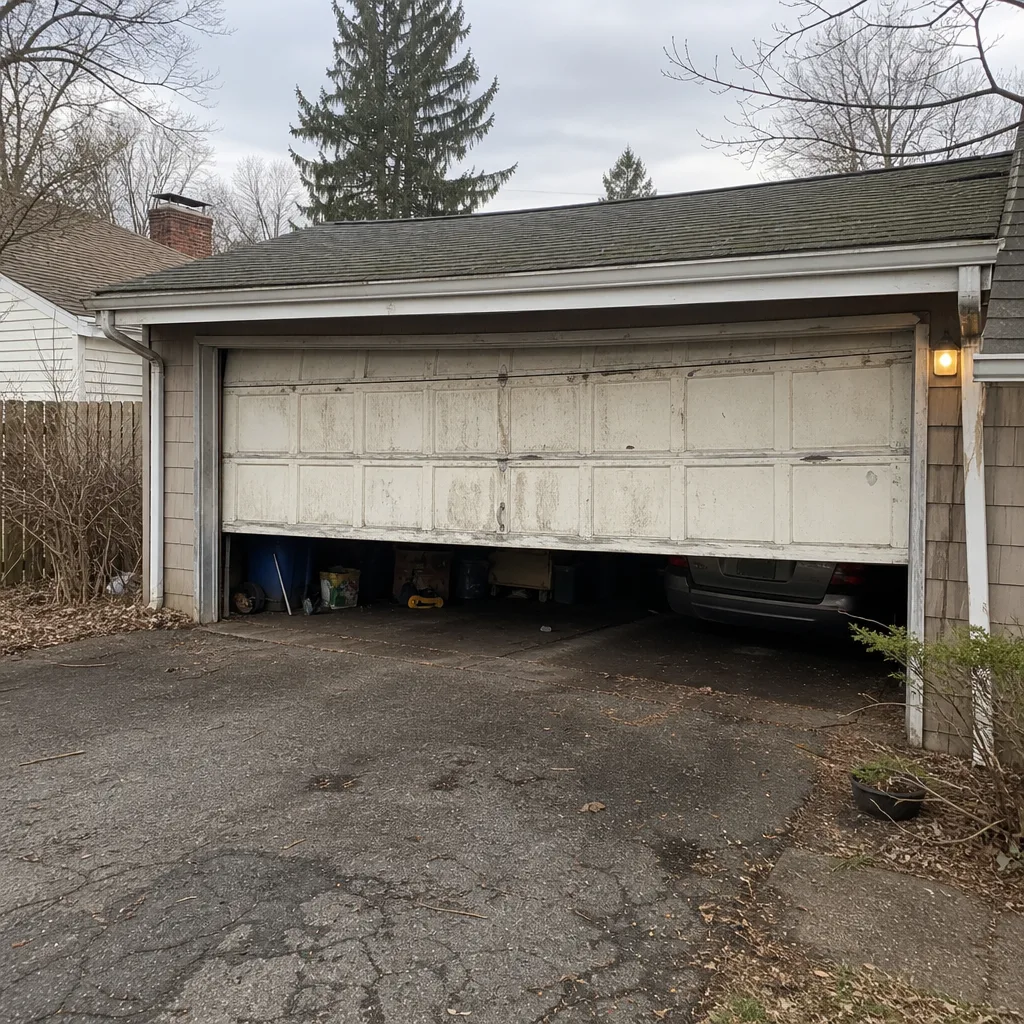 Before
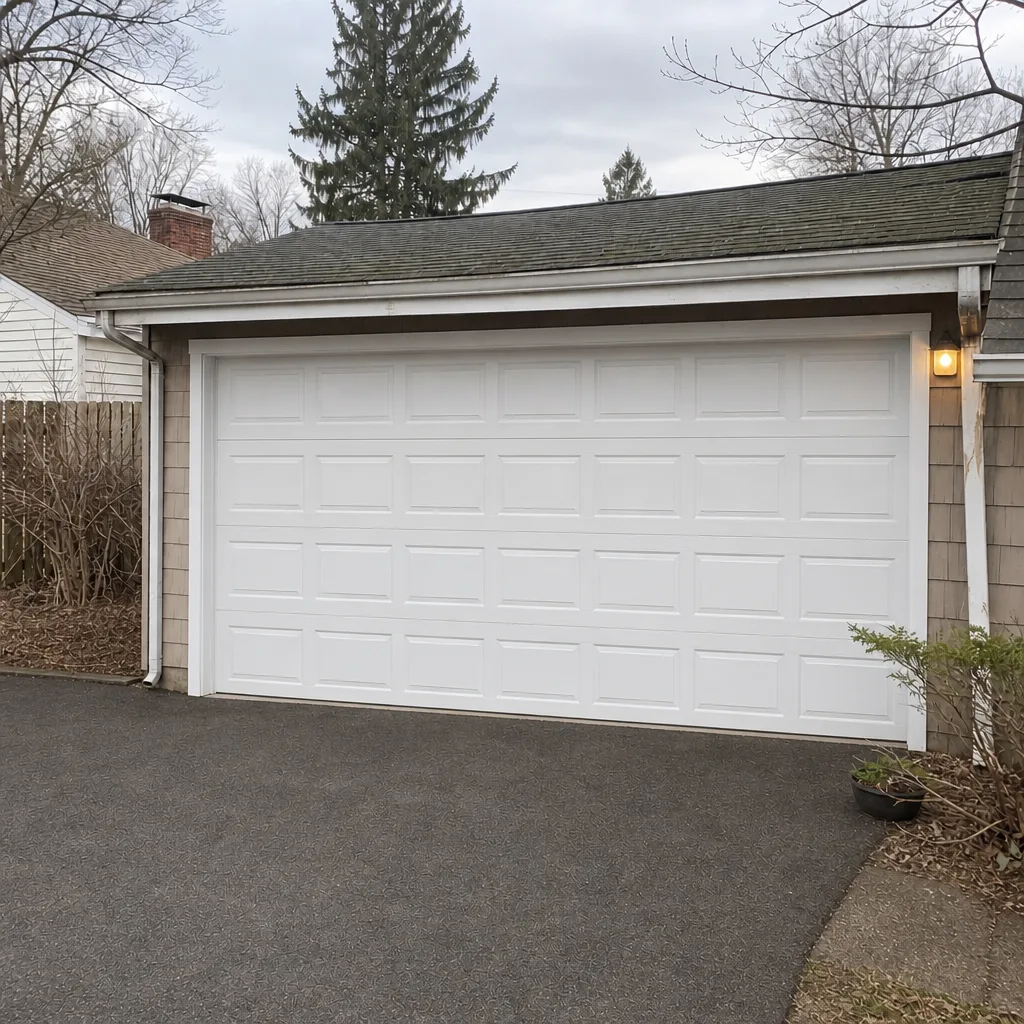 After
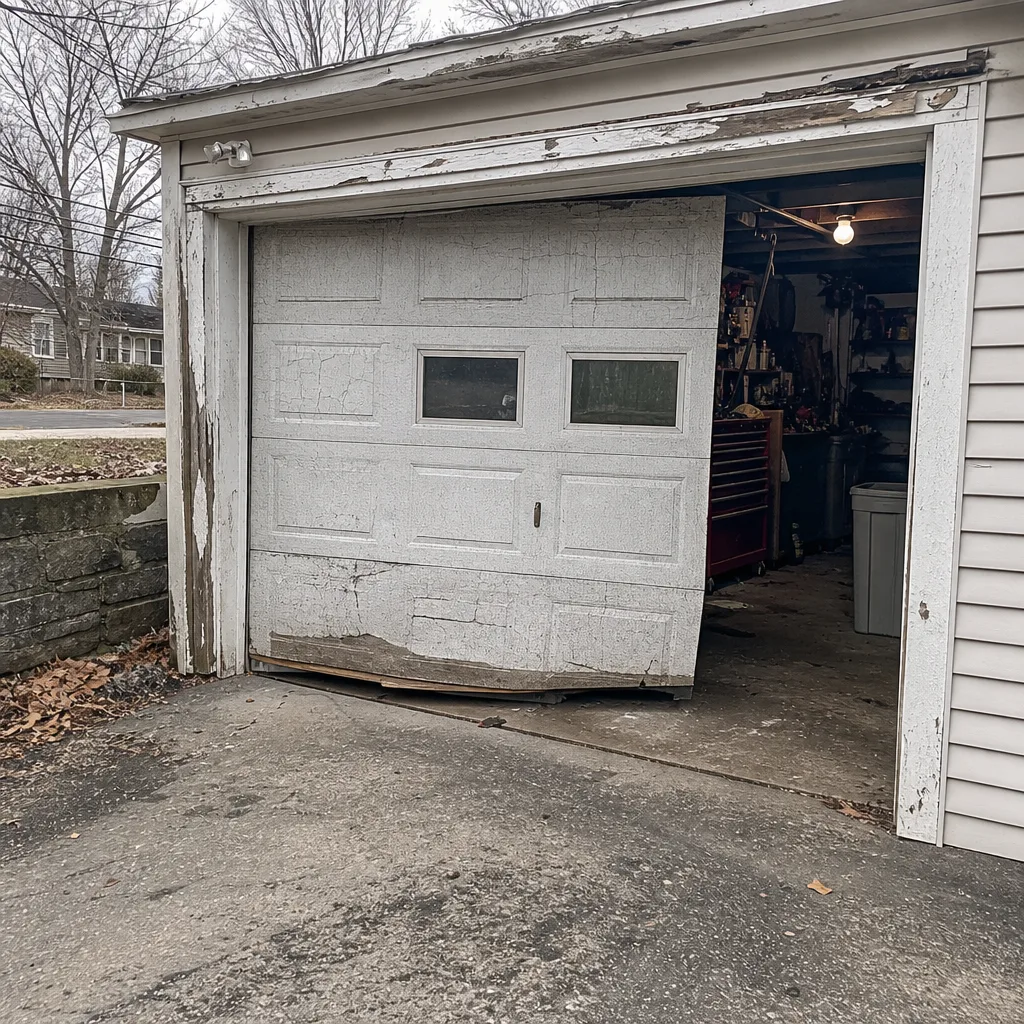 Before
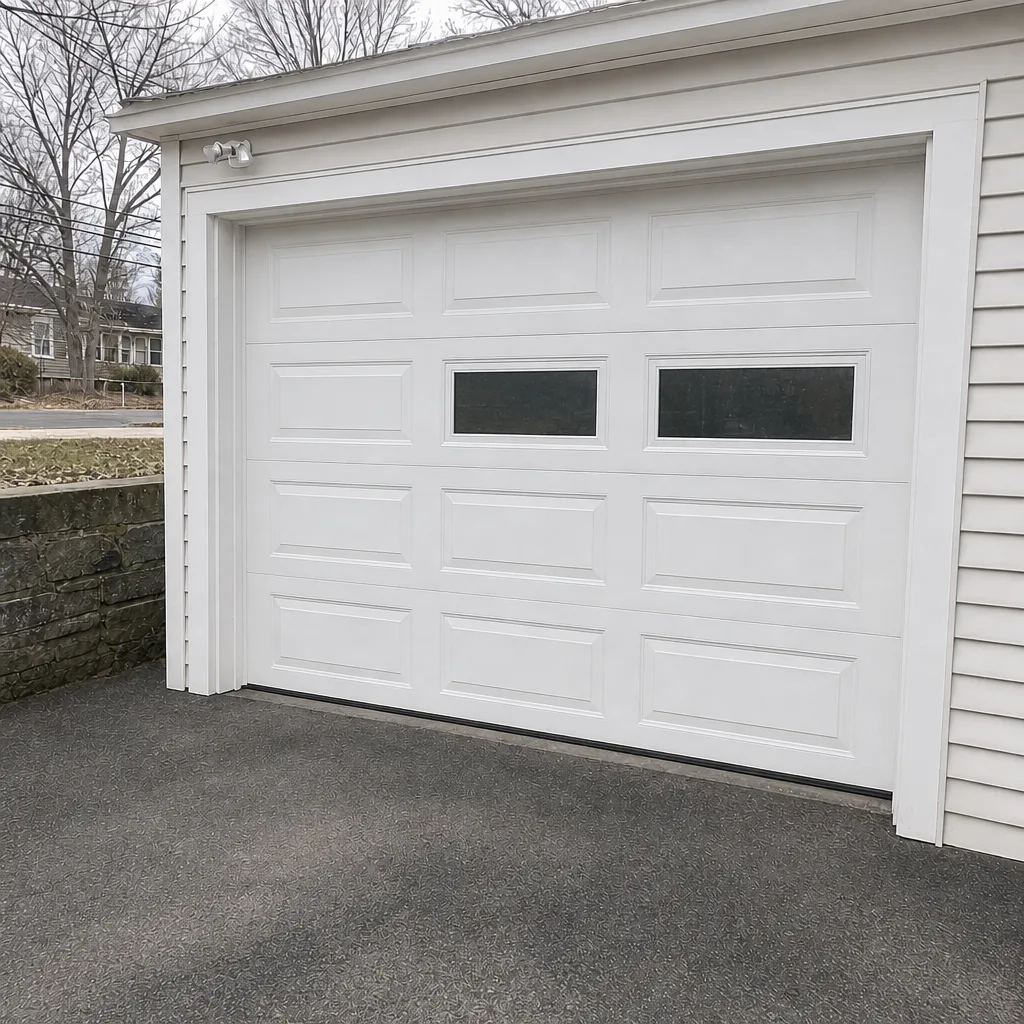 After
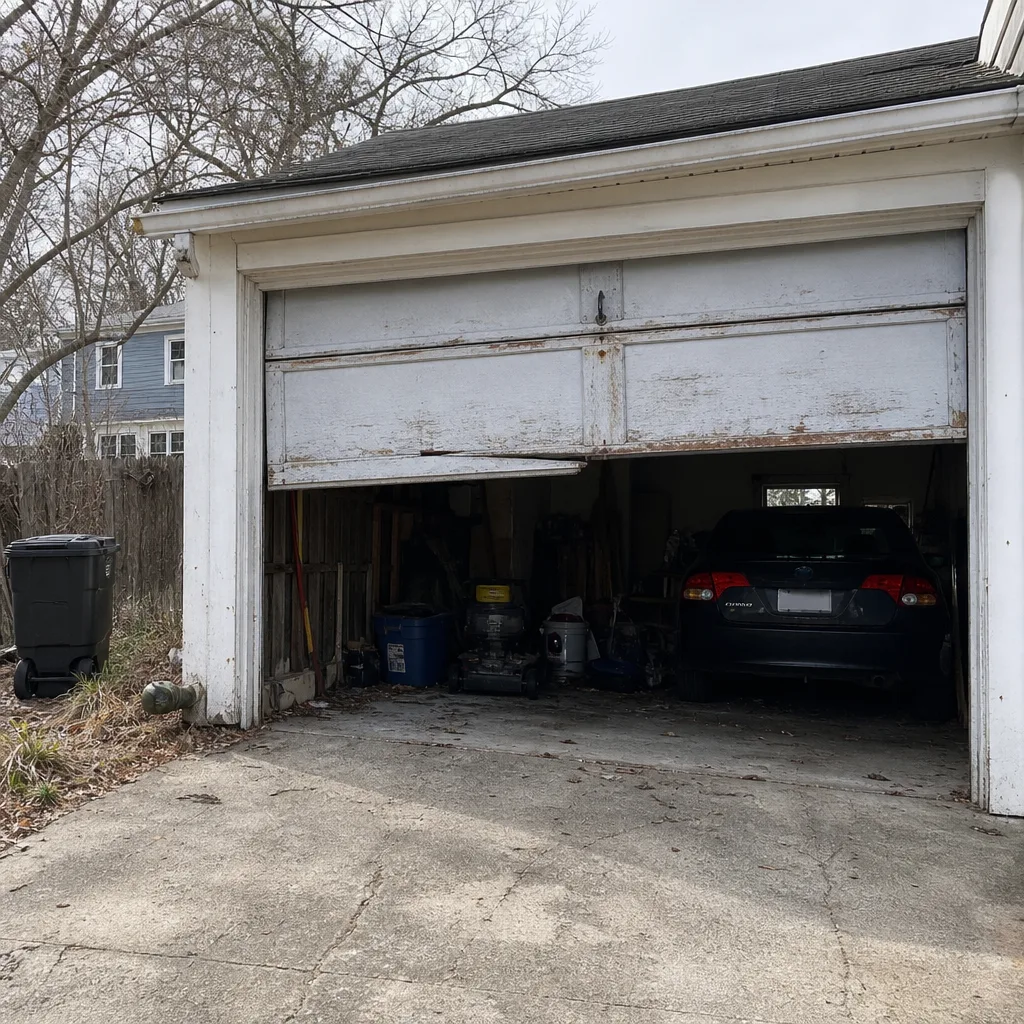 Before
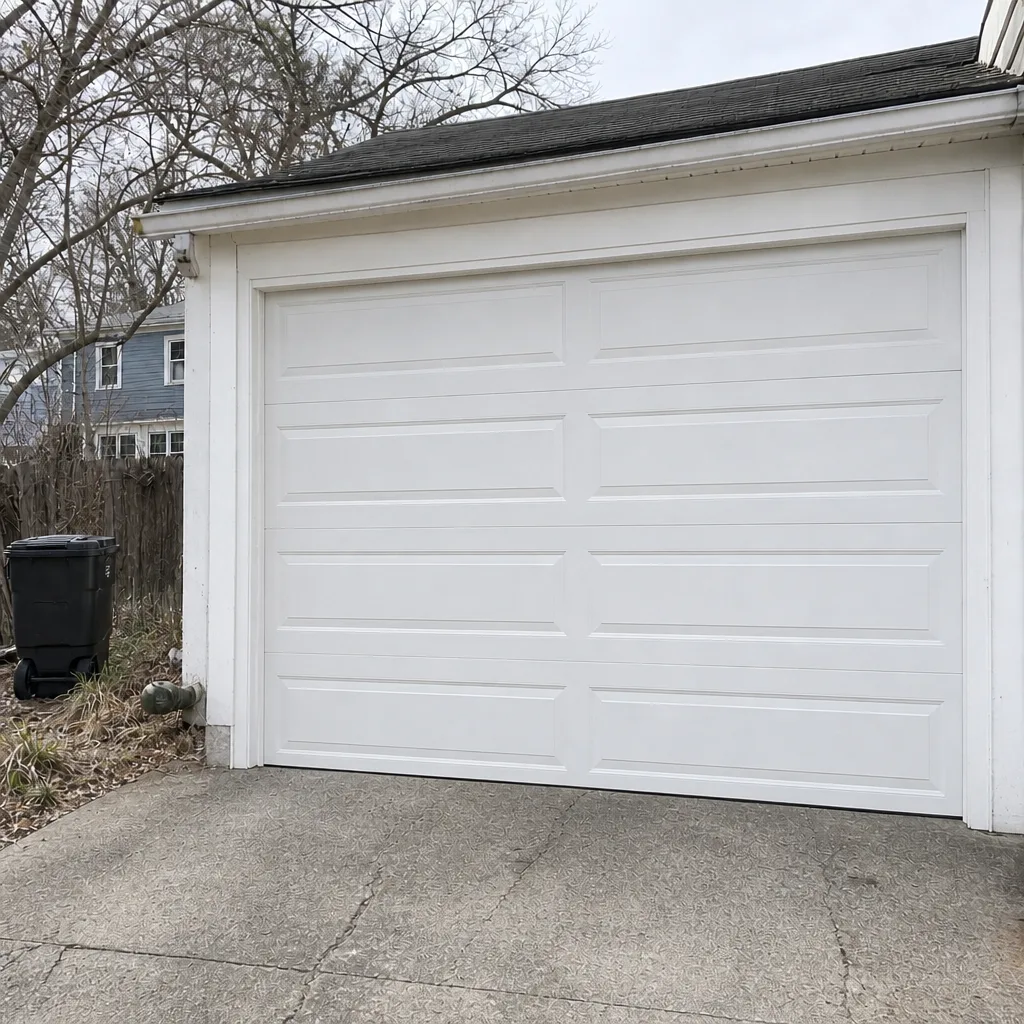 After
When to Call a Professional
A garage door problem that involves springs, cables, openers, or structural damage belongs with a trained technician. Those aren’t weekend jobs. A door that won’t close, a loud snap from the spring assembly, an opener that runs but doesn’t lift the door, or a door that’s come off its track are all reasons to call. So is a door that’s simply become a daily annoyance, slow or loud enough that you’ve started parking outside. Beverly Garage Door Repair Co offers free estimates in Beverly. Call (833) 421-1727. We answer 24/7, with fast dispatch from 7am to 7pm, Sunday through Friday. The local pro who attends is licensed and insured as the state requires, and you’ll get a written price before any work starts.
Frequently Asked Questions
Spring repair in Beverly typically costs in the range of $180 to $340 for a single spring, and most doors run a matched pair, which doubles that figure. The written estimate sets the final price. Call (833) 421-1727 for an exact quote; estimates are free.
Look for a manufacturer’s sticker or plate on the interior face of the door, usually on the top panel, the bottom panel, or the end stile. If the label is worn away, a photo of the panel profile is usually enough for a technician to identify the brand and model. Clopay, Amarr, Wayne Dalton, and Raynor all use distinctive profiles.
Same-day service is available for spring failures, doors off track, and opener breakdowns. We answer 24/7, and we dispatch from 7am to 7pm, Sunday through Friday. Call (833) 421-1727 to set up a visit.
No. The price is quoted and agreed before any work starts, and the written estimate sets the final price. If a technician finds something unexpected during the job, you’ll hear about it before any additional work begins. Call (833) 421-1727 for a free estimate.
The local pro who attends your garage is licensed and insured as the state requires. Our technicians have up to 13 years of experience, and they’re familiar with LiftMaster, Chamberlain, Genie, Raynor, and other major brands. Call (833) 421-1727 with any questions.
Torsion springs in Beverly typically last 7 to 12 years, with the shorter end of that range more common on doors that are used daily through freezing winters. Years of life also depend on the door’s weight and how well the moving parts have been lubricated. Call (833) 421-1727 if your door is getting heavier or louder.
The Bottom Line
Knowing your garage door system is the difference between a quick, well-targeted repair and a guessing game that costs more than it should. Record your brand, opener model, and spring configuration. Watch the parts Beverly’s weather stresses most: springs, seals, and panel paint. Use a technician who knows the specific system in your garage, whether that’s a Clopay door, a LiftMaster opener, or a Chamberlain unit. And keep your door dossier updated, so any future service call starts with facts instead of questions. That’s the whole strategy, and it works.
When you need help with any part of your system, call (833) 421-1727 for a free estimate. We answer 24/7, with fast dispatch from 7am to 7pm, Sunday through Friday. Same-day service is available for urgent repairs, and the local pro is licensed and insured as the state requires.
Written by the team at Beverly Garage Door Repair Co.